 Applied AI Projects & Experiments
Applied AI Projects & Experiments
Applied AI Projects & Experiments
AI Studio Tech is my applied research lab, where I design and test intelligent systems that automate workflows, analyze complex data, and demonstrate how AI can create real business impact.

These are the core frameworks and tools I work with when prototyping and testing AI-driven solutions:
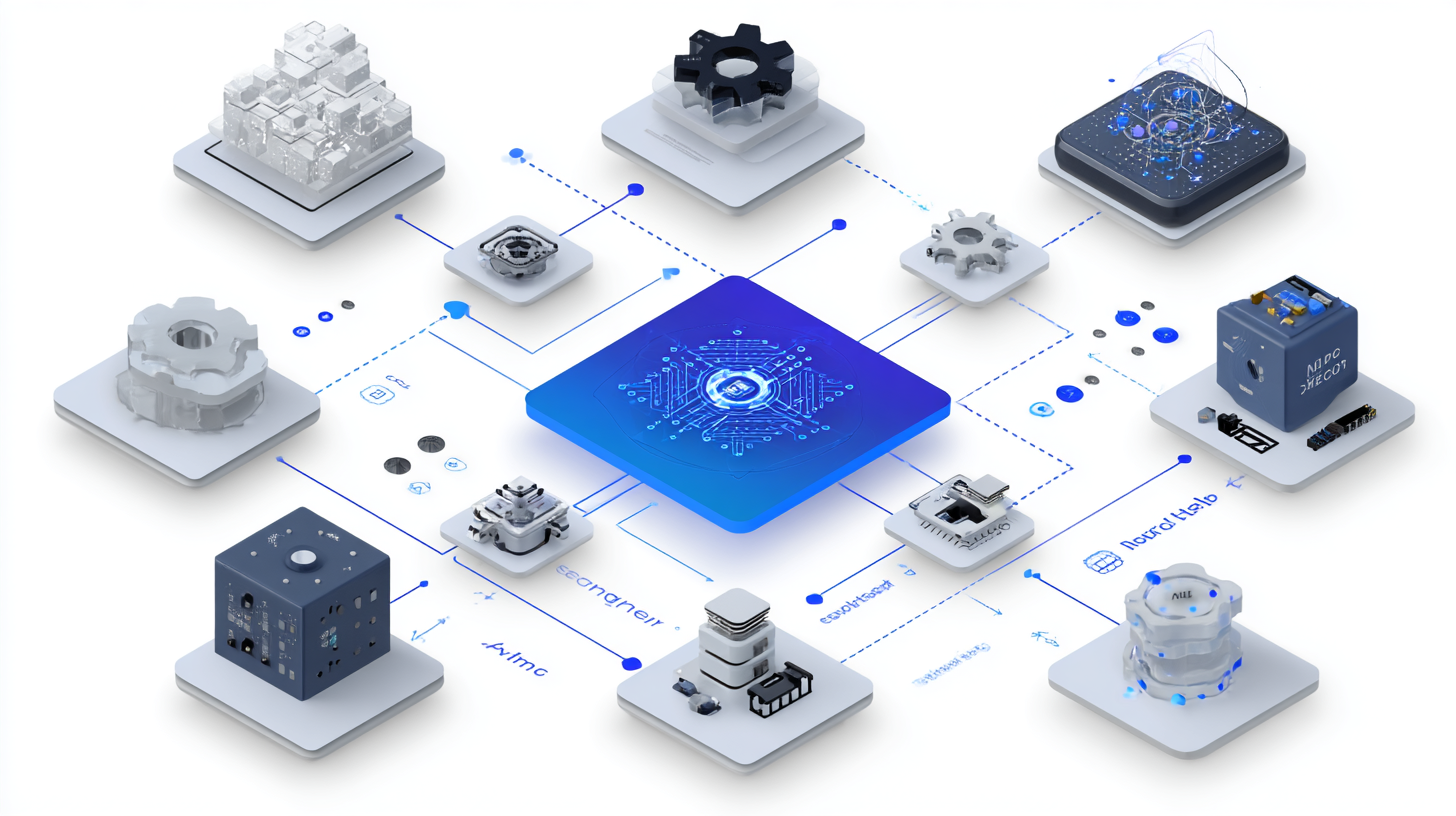
These examples illustrate experimental architectures and simulations developed to explore how AI systems can improve real-world business processes across multiple industries.
This prototype explores how large-scale language models can assist engineering teams in preparing complex, multilingual RFPs (Requests for Proposals). The objective was to test whether AI could accelerate qualification, improve content reuse, and reduce manual workload in multi-department tender processes.
🧠 Model (M): Claude 3, selected for its long-context understanding and accurate summarization of technical and legal text. Capable of processing 100+ page RFPs and generating structured draft responses.
📚 Context (C): Dataset of 150+ historical RFPs, annotated by type, outcome, and evaluation criteria. Indexed via a LangChain retrieval system to provide semantic context and content reuse.
✍️ Prompt (P): Modular prompt templates for each proposal section — company overview, compliance tables, environmental policies, methodologies — dynamically adapted to tender language.
🛠️ Auxiliary Systems: OCR preprocessing (Tesseract + layout parsers) to recover structure from poor scans. Notion API integration for collaborative review and Microsoft 365 automation for formatting and version control.
• Curated and labeled past tenders to detect structural and thematic similarities. • Normalized internal data sources (certifications, projects, team info) for capability matching. • Validated outputs with benchmark prompts to measure compliance accuracy and factual grounding.
This prototype simulates an internal IT helpdesk assistant capable of handling Level 1 support requests for a 500-employee environment. The goal was to test workflow automation using conversational AI and structured escalation.
🧠 Model (M): GPT-4o fine-tuned with synthetic IT support data and troubleshooting guides. 📚 Context (C): Simulated dataset of 20k historical tickets for triage and classification. ✍️ Prompt (P): Multi-turn conversation flows for auto-responses, escalation triggers, and solution lookup. 🛠️ Auxiliary Systems: Integrated mock APIs (ServiceNow, Slack bot) to emulate ticket creation and status updates.
• Cleaned sample ticket data to create standardized labels. • Designed intent-based routing and fallback mechanisms. • Ran simulated “shadow phase” comparisons between AI and human responses.
This prototype was built to test an AI system capable of assisting marketing teams with multi-channel campaigns. It focuses on automating segmentation, content creation, and performance optimization across regions and audiences.
🧠 Model (M): GPT-4.5 for multilingual copy generation, combined with DeepSeek for campaign performance prediction. 📚 Context (C): Synthetic dataset representing 2 years of marketing campaign data and customer personas. ✍️ Prompt (P): Structured chains for localized content variants, ensuring tone consistency per persona. 🛠️ Auxiliary Systems: Simulated HubSpot API for scheduling and AutoML models for targeting optimization.
• Generated standardized campaign metadata and cleaned audience segments. • Designed prompt templates for content generation under compliance constraints. • Evaluated copy performance metrics (CTR uplift, engagement rate) across test runs.
This simulation explored AI automation in insurance claim validation and coverage management. The goal was to test how document comprehension models can reduce manual verification effort while improving accuracy and compliance.
🧠 Model (M): Claude 3 for document summarization and eligibility validation. 📚 Context (C): Indexed policy documents and annotated claim cases. ✍️ Prompt (P): Templates for structured decision explanations and confidence scoring. 🛠️ Auxiliary Systems: OCR pipelines for PDF intake, RAG retrieval for clause grounding, and email automation for report generation.
• Created normalized claim datasets for controlled simulation. • Annotated decision logic with outcomes and exceptions. • Designed fallback routing to human review for uncertain predictions.
This experiment tested semantic document organization and version control for large development teams with extensive archives. The goal was to evaluate how LLM-based search and summarization could improve accessibility and traceability.
🧠 Model (M): GPT-4o for semantic search, classification, and summarization. 📚 Context (C): Simulated dataset of 50k documents with project metadata (status, version, author). ✍️ Prompt (P): Instructions for detecting duplicates, mapping lineage, and generating summaries. 🛠️ Auxiliary Systems: Vector database for retrieval and simulated integration with Confluence and GitHub repositories.
• Indexed legacy documentation and structured metadata tags. • Built versioning logic and retention policies. • Conducted pilot runs to measure retrieval speed and relevance.
Across prototypes and modeled scenarios, organizations adopting similar architectures typically observe:
30–50%
Less time spent on repetitive, manual processes
20–40%
Faster decision-making through real-time insights
25–60%
Higher operational efficiency across departments
40%+
Improved accuracy and compliance in data handling
2–5x
Greater scalability and speed in workflow execution
+35%
Better experience for users and teams through faster responses
I’m always open to discussing how these technologies can be implemented in real business contexts. Feel free to reach out if you’d like to collaborate or exchange ideas.
Contact / CollaborationYou can also connect via email: info@aistudioglobal.com